How I work

Read the building. Watch the works. Sign what is mandated.

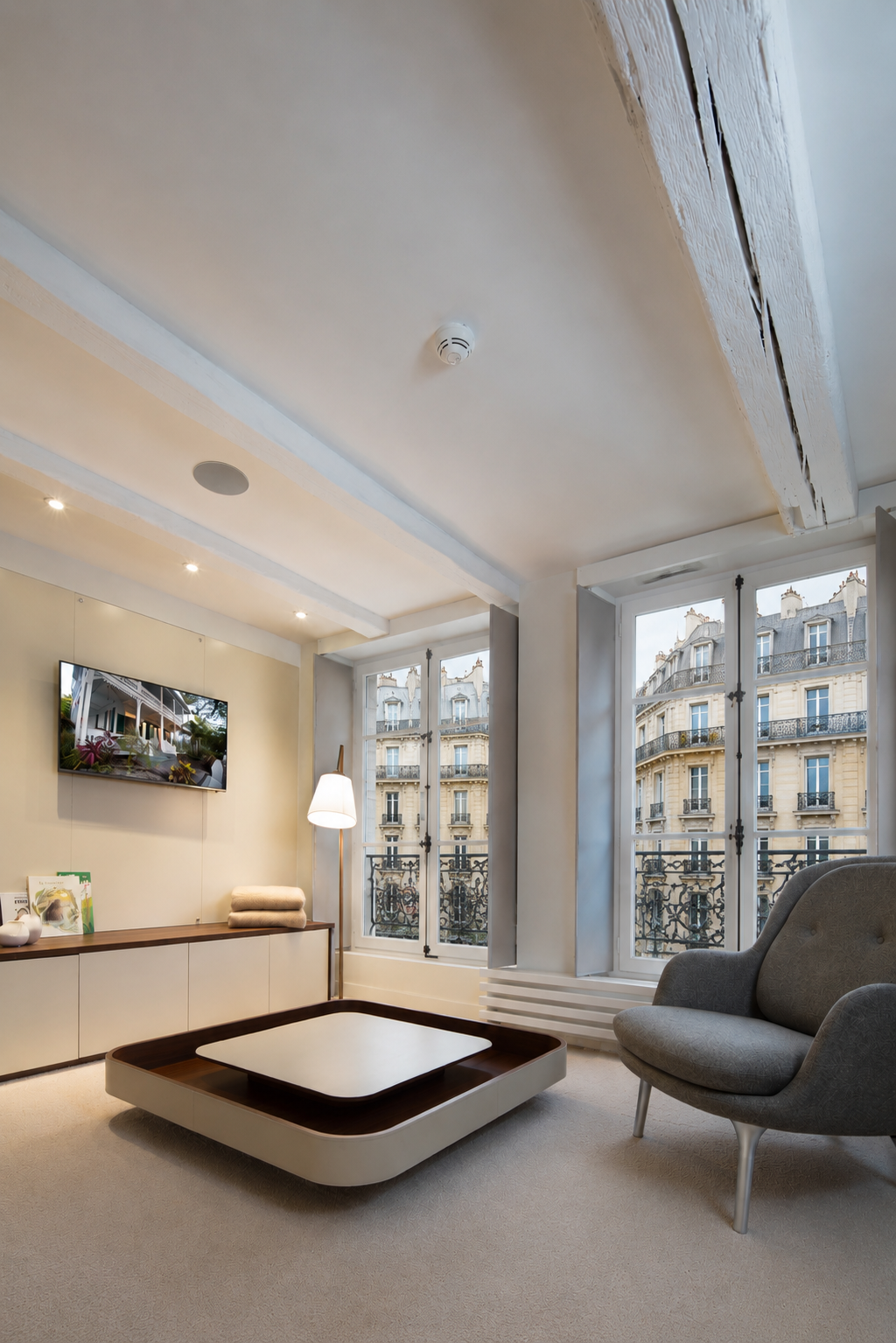
A finished Paris living room, exposed beams and French windows onto Haussmann façades.

My role is that of an owner’s representative — known in French as AMOA, for Assistance à Maîtrise d’Ouvrage: a client-side mandate of reading, reporting and verification. The coordination of the trades belongs to the design authority you retain — architect or general contractor. My work is to propose, to read, to walk the site, to write, and to forward to you for signature any document the design authority hands me for you. One position, held without deviation, across three phases.

Three phases

I. Before the offer

I visit the property with you, or on your behalf. I read the co-ownership rules, the last three years of minutes, the technical diagnostics and the surface certificate. I cost the works to a defensible range. I return a single page — go, go with conditions, or do not go. When a buyer’s agent is retained, I draft the brief and hold a monthly call with them. The price negotiation and the notary signature remain with the parties whose role they are.

II. During the works

I propose one or more architects or general contractors I know professionally; you select and contract with them directly, at their rates. I read every quote they send you, line by line. I walk the site each week, photograph what has been done, and each Friday a site journal reaches you: dated images, decisions pending, discrepancies flagged to the design authority, budget consumed. I represent you in site meetings when mandated, and sign only the documents your mandate names.

III. After handover

On handover day, I run the technical tests — water, electricity, internet, heating, ventilation — check the equipment against the signed quotes, and prepare the pre-handover synthesis: a structured note, room by room, that lists what is finished, what carries a reservation, and what still owes you a return visit. The official handover report is then signed by you with your design authority. For the year that follows, I track the reservations to completion and flag any issue that falls under the one-year warranty.
A Paris bedroom, turquoise throw on the bed in soft daylight.
Paris pied-à-terre — bedroom delivered, detail of the bed throw.

What a weekly cahier looks like

Every Friday, one document reaches you. A written weekly, long enough to be useful and short enough to be read over coffee.

  • Dated photographs of what I saw on site this week
  • Hours logged, by me, on and off site
  • Budget consumed against the signed quotes
  • Decisions pending, with a deadline and a shortest path
  • Discrepancies flagged to the design authority, with their response

Sample cahier available on request.

Where my mandate ends

A mandate is defined as much by its borders as by its acts. Three adjacent roles remain with the parties whose profession they are.

The transaction itself

The price negotiation, the signature at the notary and the coordination with the bank and the legal parties of the sale belong to your notary and, where retained, to your buyer’s agent.

Coordinating the trades

Site coordination belongs to the design authority — architect or general contractor — that you retain. My work is to verify what they deliver and to report what I see.

Concierge work

Groceries, flowers, bed-making, furniture installation and host key handovers belong to a concierge you may retain separately. My mandate ends on the night you first sleep in the apartment.

Four chronological steps, each priced in firm euros, each standalone. A half-rate clause applies if the works overrun without your fault.

See the full fee schedule